


Apply Now
B.E, B. Tech, M.E, M. Tech
Eligibility
6 Months
Duration
On-Site Office
Mode
On Completion
Certificate
BENEFITS
Joining Qirion Labs
Hands-On Project
Experience
From concept to verification, work on tasks that mirror real engineering challenges.

Access to Licensed Industry Tools
Get ready for the workplace with the exact tools used by engineers on the job.

Personalized Mentorship & Guidance
Receive tailored feedback and guidance to accelerate your learning journey.

Cutting-Edge VLSI & Embedded Curriculum
Our syllabus evolves with advancements in VLSI and embedded technologies.

Collaborations with Industry Leaders
Giving our learners access to exclusive knowledge and opportunities.

Certification Recognized by Industry
Showcase your expertise with certifications that boost your employability.
SCOPE
Why Choose Embedded Systems & VLSI Design?
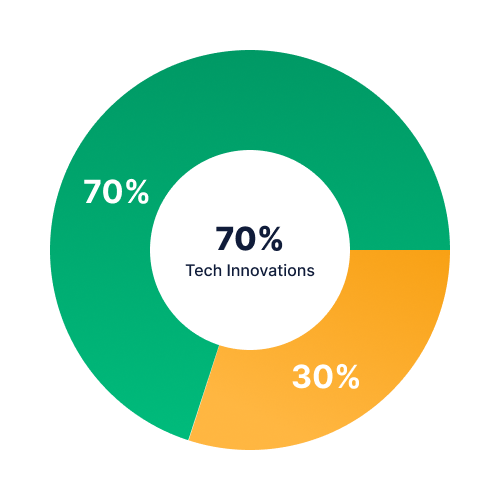
70% of Tech Innovations Use Embedded Systems
From smartphones to EVs, most emerging technologies rely on them.

$116+ Billion Global
Market
Demand for IoT, automotive electronics is pushing rapid growth.
CURRICULUM
What You’ll Learn Here
Month 1 & 2
Digital Electronics Basics
Logic Gates, Flip-Flops
Microprocessor vs Microcontroller
Number Systems
Introduction to Embedded Systems
Microcontroller Architectures (8051, AVR, PIC, ARM)
Memory Types
Lab Work: Schematic entry & simulation with basic microcontroller kits
C Programming for Embedded Systems
Toolchains, IDEs
Register-Level Access
I/O Control, Timers, Counters, Interrupts
Debouncing Techniques
External Device Interfacing
Lab Work: GPIO programming (LED blinking), Switch & Button handling
Month 3 & 4
Advanced Sensor Interfacing
Real-time Data Collection
Data Preprocessing: Filtering, Normalization for ML
ML Concepts: Regression, Classification, Neural Networks
Tools: TensorFlow Lite, Edge Impulse, CMSIS-NN
Month 5 & 6
Model Quantization, Pruning
Conversion for Microcontrollers
Embedded ML Applications: Gesture Detection, Voice Command, Anomaly Detection
Mini-Project: Data Collection → Model Training → On-Device Deployment
Final Project, Demo, Documentation
Month 1 & 2
Digital Electronics Basics
Logic Gates, Flip-Flops
Microprocessor vs Microcontroller
Number Systems
Introduction to Embedded Systems
Microcontroller Architectures (8051, AVR, PIC, ARM)
Memory Types
Lab Work: Schematic entry & simulation with basic microcontroller kits
C Programming for Embedded Systems
Toolchains, IDEs
Register-Level Access
I/O Control, Timers, Counters, Interrupts
Debouncing Techniques
Debouncing Techniques
Lab Work: GPIO programming (LED blinking), Switch & Button handling
Month 3 & 4
ADC/DAC, PWM
Motors & Sensors Control
Communication Protocols: UART, SPI, I2C, CAN Basics
Lab Work: Sensor interfacing (Temperature, Light), Relay & Motor control
IoT Architecture
IoT Protocols: MQTT, CoAP
Network Stacks
WiFi & BLE (ESP32, CC3200)
Edge Gateways
Month 5 & 6
Secure Data Transfer & Encryption
OTA Updates
Cloud Platforms: AWS IoT, Azure, Google IoT
Data Streams & Dashboards
Lab Work: MCU-to-Cloud data sending, Live dashboard creation
Home Automation
Industrial Monitoring
Mini-Project: Remote Environmental Monitoring, Smart Energy Meter
Month 1 & 2
Digital Electronics Basics
Logic Gates, Flip-Flops
Microprocessor vs Microcontroller
Number Systems
Introduction to Embedded Systems
Microcontroller Architectures (8051, AVR, PIC, ARM)
Memory Types
Lab Work: Schematic entry & simulation with basic microcontroller kits
C Programming for Embedded Systems
Toolchains, IDEs
Register-Level Access
I/O Control, Timers, Counters, Interrupts
Debouncing Techniques
External Device Interfacing
Lab Work: GPIO programming (LED blinking), Switch & Button handling
Month 3 & 4
ADC/DAC, PWM
Motors & Sensors Control
Communication Protocols: UART, SPI, I2C, CAN Basics
Lab Work: Sensor interfacing (Temperature, Light), Relay & Motor control
RTOS Fundamentals
FreeRTOS: Tasks, Scheduling
Interrupt Handling, Synchronization
Semaphores, Watchdog Timers
Semaphores, Watchdog Timers
Month 5 & 6
Power Management
Bootloaders, Firmware Updates
Embedded C Optimization
Linker Scripts, Memory Mapping
Lab Work: JTAG Debugging, In-Circuit Emulation
System Integration & Design Cycle
Real-World Case Studies
Capstone Project (from schematic to prototype)
Lab Work: Final project completion, testing, and documentation
Week 1
Introduction to Embedded Systems
Basics of Microcontrollers (8051, PIC, AVR, ARM, Arduino, STM32)
Embedded C Programming - Basics
GPIO Programming
Timers & Counters
Week 2
Interrupts
Analog to Digital Conversion (ADC)
PWM Generation
Serial Communication (UART)
I2C Communication
Week 3
SPI Communication
RTOS Basics
Wireless Communication (Bluetooth, Wi-Fi)
Project Development Process
Final Project & Presentation
Week 1
Introduction to Embedded Systems
Basics of Microcontrollers (8051, PIC, AVR, ARM, Arduino, STM32)
Embedded C Programming - Basics
GPIO Programming
Timers & Counters
Week 2
Interrupts
Analog to Digital Conversion (ADC)
PWM Generation
Serial Communication (UART)
I2C Communication
Week 3
SPI Communication
RTOS Basics
Wireless Communication (Bluetooth, Wi-Fi)
Project Development Process
Final Project & Presentation
Week 1
Introduction to Embedded Systems
Basics of Microcontrollers (8051, PIC, AVR, ARM, Arduino, STM32)
Embedded C Programming - Basics
GPIO Programming
Timers & Counters
Week 2
Interrupts
Analog to Digital Conversion (ADC)
PWM Generation
Serial Communication (UART)
I2C Communication
Week 3
SPI Communication
RTOS Basics
Wireless Communication (Bluetooth, Wi-Fi)
Project Development Process
Final Project & Presentation
Making Your Dream Job a Reality












PROCESS
Start Your Learning Journey

Apply
Apply to a program of your choice & get a call from our program advisor

Interviews
Technical interview with our team to understand where you stand

Program Fee
Selected candidate will be allowed to pay for the program fee

On boarding
Complete onboarding process and get ready for your first practical session
PRICING
Professional Program Overview
LEAP XPERT
6 Months of Core VLSI & Embedded Design Training
₹1,50,000
₹1,00,000
+GST
FAQ'S
Frequently Asked Questions
What qualifications are required for the LEAP XPERT program?
The Accel 30 program requires a minimum qualification of a B.E, B. Tech, M.E, M. Tech. (Electronics & Computer Streams) degree obtained from 2024 onwards & a commitment to continuous learning are also key qualifications.
Is there any selection process for the LEAP XPERT program?
Yes, there is a selection process to ensure the right fit for the program. This includes an aptitude written exam, interview rounds and assessments to ensure overall suitability for the program.
Is there any EMI or Installment Payment available?
Yes, we understand the financial commitment involved. We offer EMI and installment payment options to make the Techie Super program more accessible. Details about payment plans are available in the course details.